
Travelling in Latvia
Latvia sits at the centre of the Baltic states, bridging the Nordic feel of Estonia to the north with the Central European warmth of Lithuania to the south. Its capital Riga is the largest city in the Baltics, yet step outside the city and you find yourself in a country of deep forests, empty beaches and a tradition of song that runs through the national character.
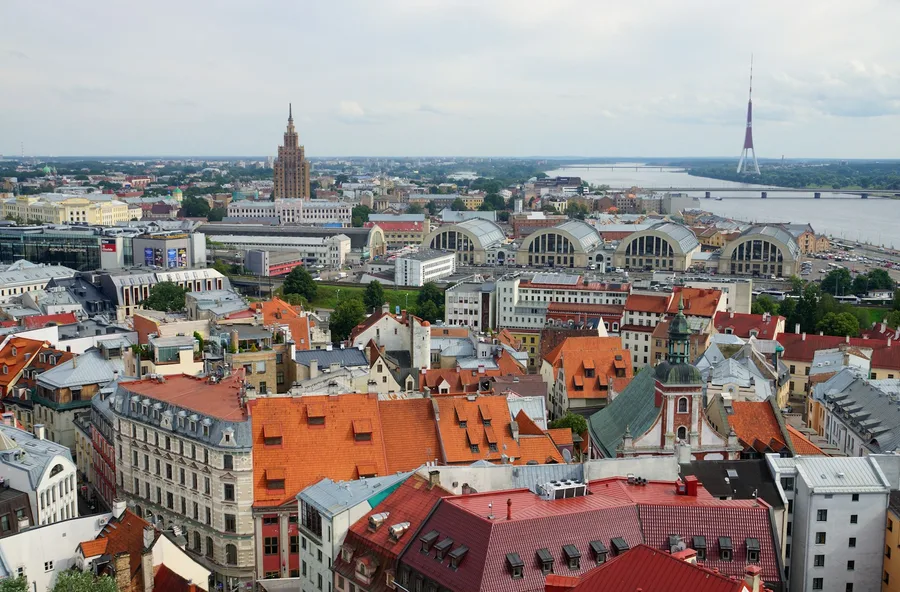
Riga, Latvia — where most journeys begin
Riga, Latvia commands attention from the moment you arrive. The Old Town is a compact maze of medieval churches, guild houses and cobblestone squares, anchored by the vast Riga Central Market in five former Zeppelin hangars. But what sets Riga apart from other European capitals is its art nouveau district — over 800 buildings in the Jugendstil style, the densest concentration anywhere in the world. Alberta Street alone contains a dozen ornate facades by Mikhail Eisenstein, each more elaborate than the last.
Riga is also a city of food. The Central Market, a UNESCO World Heritage Site in its own right, is where locals buy smoked fish, rye bread, fermented vegetables and honey from across the country. The restaurant scene has matured considerably — several Riga restaurants now hold Michelin recognition, drawing on Latvia's strong tradition of foraging, smoking and preserving.
The Gauja Valley
An hour northeast of Riga, the Gauja River has carved a valley through sandstone cliffs that is unlike anything else in the flat Baltic landscape. Sigulda, Latvia sits at the valley's western edge, offering access to hiking trails, the Gutmana Cave (the largest cave in the Baltics) and a cable car that crosses the valley at canopy height. In autumn, the valley turns golden and red — it is sometimes called the Switzerland of Latvia, a comparison that undersells its own distinct character.
Turaida Castle, a red-brick fortress originally built by the Archbishop of Riga in 1214, stands on a hill above the Gauja. The castle has been carefully restored and now serves as a museum reserve, with a sculpture garden, historical exhibitions and commanding views of the valley below. Across the river, the ruins of Sigulda Medieval Castle offer a different perspective — less restored, more atmospheric.
Further upstream, Cesis, Latvia is one of the country's oldest and most charming towns. Its medieval castle, once the seat of the Livonian Order's master, can be explored by lantern light after dark. The surrounding old town has a growing community of artisans, potters and craft brewers who have revitalised what was once a quiet provincial centre.
Western Latvia and the coast
Jurmala, Latvia stretches for 32 kilometres along the Gulf of Riga, a chain of resort villages connected by a single road and a commuter rail line from the capital. The beach is wide, white and backed by pine forest. The wooden architecture — ornate summer houses from the 19th century — gives Jurmala a nostalgic character that feels distinct from anywhere else in the Baltics.
Kuldiga, Latvia, in the western region of Kurzeme, earned UNESCO World Heritage status for its remarkably preserved old town and the Venta Rapid — Europe's widest natural waterfall, stretching 240 metres across the Venta River. The town's red-roofed timber houses, cobblestone streets and old brick bridge make it one of the most photogenic places in the country. Spring brings a spectacle: fish leaping the rapids, a tradition that inspired a centuries-old fishing method using wicker baskets.
Liepaja, Latvia, on the open Baltic coast, is a city of contrasts. The old town centre has baroque churches and a pedestrian street with cafes and boutiques. To the north, the Karosta district — a former Russian naval base — contains military architecture on a grand scale, including an Orthodox cathedral and a naval prison that now operates as a museum. The beach at Liepaja is one of the finest in the Baltics: long, windswept and largely empty.
Southern Latvia
Rundale Palace in southern Latvia is the most significant secular baroque building in the Baltics. Designed by Bartolomeo Rastrelli — the same architect behind the Winter Palace in St Petersburg — it was built in the 1730s as a summer residence for the Duke of Courland. The palace's 138 rooms include a gilded throne room and a white dining hall, while the restored French formal garden extends behind the building in geometric precision.
Practical information
Latvia uses the euro and is part of the Schengen Area. Riga is well connected by air to most European capitals, and the city has direct bus and rail links to Tallinn (about four hours) and Vilnius (about four hours). English is widely understood in Riga and tourist areas, though learning a few Latvian phrases — paldies for thank you, labdien for good day — is always appreciated.
The best time to visit is late May through September. Midsummer (Jani, around June 23) is Latvia's most important celebration, when the entire country gathers to sing, drink beer, eat caraway cheese and stay up through the shortest night of the year. Autumn is excellent for the Gauja Valley's foliage. Winter brings Christmas markets to Riga's old town — Riga claims to have hosted the first Christmas tree in Europe, in 1510.
Places in Latvia
Riga Old Town
The largest old town in the Baltics with 800+ art nouveau buildings.
Jurmala
32-kilometre white-sand beach and wooden resort architecture.
Sigulda
Gateway to the Gauja Valley with castle ruins and forest trails.
Turaida Castle
13th-century Livonian Order castle in the Gauja Valley.
Cesis
Medieval castle ruins and a thriving artisan quarter.
Kuldiga
UNESCO-listed town with Europe's widest waterfall.
Liepaja
Baltic coast port city with Karosta military district.
Rundale Palace
Baroque masterpiece by Rastrelli in southern Latvia.
Journeys featuring Latvia
Frequently asked questions
- Do I need a visa to visit Latvia?
- Latvia is part of the Schengen Area. EU, US, UK, Canadian, and Australian citizens can visit visa-free for up to 90 days. Other nationalities should check with a Latvian embassy.
- What currency does Latvia use?
- Latvia uses the euro. Cards are accepted almost everywhere, including taxis, markets, and small shops. ATMs are easy to find in cities and towns.
- What is the best time to visit Latvia?
- Late May to September is ideal, with warm weather and long days. Riga's midsummer festival (Jani) in late June is a highlight. Autumn brings golden colours to the Gauja Valley. Winter is cold but atmospheric, with Christmas markets in Riga.
- How many days should I spend in Latvia?
- Two to three days covers Riga well. Add a day each for Sigulda, Jurmala, or a southern Latvia road trip. A full week lets you explore Kuldiga, Liepaja on the coast, and Rundale Palace without rushing.
- Is Latvia safe for tourists?
- Latvia is one of the safest countries in Europe for tourists. Violent crime is rare. Take normal precautions in Riga's Old Town at night and watch for pickpockets in crowded areas, as in any European capital.