
When to go: reading the Baltic seasons
The Baltic states sit between the 53rd and 59th parallels — roughly the same latitude as southern Alaska, though the Gulf Stream keeps them considerably warmer. What this latitude does guarantee is dramatic variation in daylight. In late June, Tallinn gets nearly nineteen hours of sunlight. In late December, barely six. The seasons here are not subtle. They arrive with force, and each one changes the character of the region so completely that visiting in July and visiting in January feel like travelling to different countries.
Spring: April and May
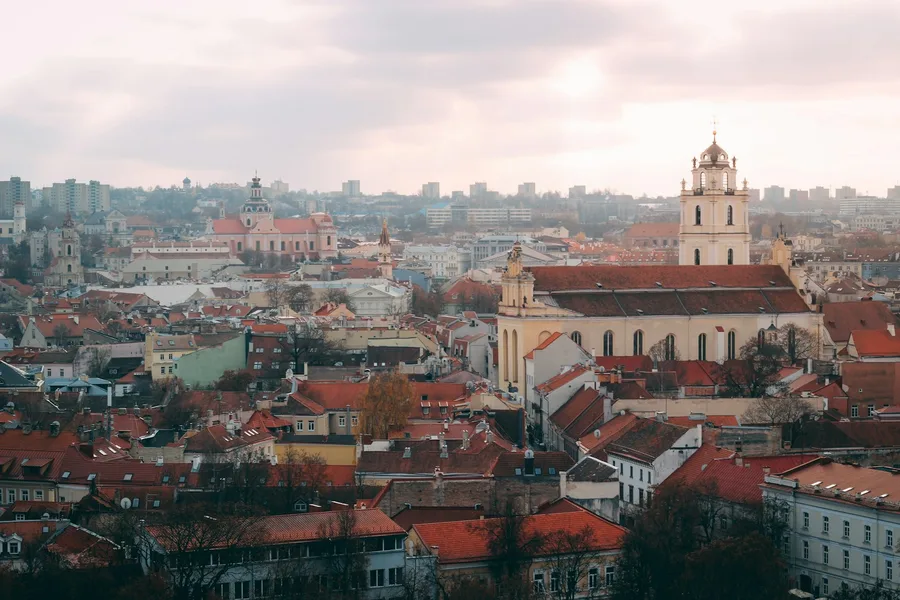
Spring arrives late and moves fast. In early April, snow may still linger in Estonian forests and along northern Latvian roads. By mid-May, the birch trees have leafed out, the parks in Vilnius, Lithuania, are green, and outdoor cafe terraces open almost overnight. April is a quiet month for tourism — prices are low, attractions are uncrowded, and the cities have a pleasant, waking-up quality. The light is clear and low-angled, good for photography.
May is one of the best months to visit. The days are already long (fifteen to sixteen hours of daylight), the weather is mild — typically 12 to 18 degrees — and the summer crowds have not yet arrived. Wildflowers bloom in the meadows of the Gauja Valley in Latvia and across the Estonian islands. The one risk is a late cold snap. Pack a warm layer regardless.
Summer solstice: the heart of the year
Midsummer is the most important secular holiday in all three countries, and each celebrates it on the night of June 23rd. In Latvia it is Jāņi, in Estonia Jaanipāev, in Lithuania Joninės. The traditions overlap: bonfires, flower wreaths, singing, cheese and beer, and staying up through the brief hours of near-darkness. In the countryside, especially in Latvia, Jāņi is still observed with genuine fervour — families gather at farmsteads, light fires on hilltops, and sing traditional songs (dainas) until dawn. In the cities, the celebrations have a more festive, public feel, but the countryside version is the one worth seeking out.
The white nights around the solstice — when the sky never fully darkens — are a defining experience of a Baltic summer. Walking through Tallinn's Old Town at midnight in soft grey light, or sitting on the dunes of the Curonian Spit as the sun barely dips below the horizon, is something that stays with you.
July and August: peak season
The warmest months bring the most visitors. Average temperatures sit between 18 and 24 degrees, occasionally pushing above 30 during heat waves. The Baltic Sea reaches a swimmable 18 to 22 degrees by late July. Beach towns like Jūrmala, Latvia, and Pärnu, Estonia, fill with families. The coastal islands — Saaremaa, Hiiumaa, Muhu — are at their most accessible and most crowded.
August is reliably warm and has slightly fewer tourists than July. It is the best month for swimming, foraging (wild berries and mushrooms begin to appear in the forests), and outdoor festivals. The Birgitta Festival in Tallinn, held in the ruins of a medieval convent, is a highlight. By late August, the first hints of autumn colour appear in the birch forests, and the evening light takes on a golden quality.
September: the golden month
Many locals consider September the finest month in the Baltics. The summer crowds disperse, the heat softens, and the forests begin their slow turn from green to gold. Daytime temperatures hover around 14 to 18 degrees — comfortable for walking and sightseeing. The Gauja Valley in Latvia and the national parks of Lithuania are at their most photogenic. Mushroom foraging reaches its peak, and farmers' markets are loaded with the autumn harvest — apples, root vegetables, honey, smoked fish.
September is also the best month for travelling between all three capitals, when accommodation prices drop and the roads are quiet. The light in September — low, warm, and lingering — makes everything look better than it has any right to.
Winter: November through March
Winter in the Baltics is long, dark, and cold. Temperatures regularly drop below minus ten, and daylight dwindles to six or seven hours by December. For some travellers, this is precisely the appeal. The Christmas markets in Tallinn, Riga, and Vilnius are among the best in northern Europe — smaller and less commercial than the German or Austrian versions, with handmade crafts, mulled wine, and roasted almonds in medieval squares dusted with snow. Tallinn's market in Town Hall Square and Riga's market in the Dome Square are particularly atmospheric.
January and February are the coldest months. Snow blankets the countryside and the frozen lakes and bogs take on a stark, monochrome beauty. Cross-country skiing, snowshoeing, and bog-walking on frozen wetlands are all possible, and the Estonian islands in winter have a haunting emptiness. The cities are quiet, the museums uncrowded, and hotel rates are at their lowest.
There is no wrong time to visit the Baltics, only different versions of the same place. The September visitor and the January visitor will both believe they saw the real thing — and both will be right.
The shoulder seasons — May and September — offer the best balance of weather, light, price, and crowd levels. But the Baltics are a year-round destination, and each season reveals something the others hide. The question is not really when to go, but what kind of light you want to see it in.
Plan your visit
We organise private, guided journeys through the Baltics. Tell us your dates and we will build the route around you.
Start planning →