
Baltic road trip: Vilnius to Tallinn
The drive from Vilnius, Lithuania to Tallinn, Estonia covers roughly 600 kilometres if you go direct. But going direct would mean missing almost everything worth seeing. This itinerary takes ten days, adds about 400 kilometres of detours, and passes through all three Baltic countries. The roads are good, the tolls are nonexistent, and the distances between stops are short enough that you never spend more than three hours behind the wheel in a single day.
Before you go: practical notes
All three Baltic states drive on the right. Speed limits are generally 90 km/h on highways and 50 km/h in towns, though some stretches of the Via Baltica (the main north-south highway, E67) allow 110 km/h. There are no toll roads in Lithuania, Latvia, or Estonia. Fuel prices are similar across all three countries and slightly cheaper than western Europe.
You can rent a car in Vilnius and drop it in Tallinn -- most international rental companies allow one-way drops within the Baltics, though there is usually a fee of 50 to 150 euros. Book in advance during summer. An international driving permit is not required for EU or UK licence holders, but carry your licence, registration, and insurance documents. Parking in city centres is metered but inexpensive by European standards.
Days 1-2: Vilnius and Trakai, Lithuania
Spend your first day in Vilnius, Lithuania -- the baroque Old Town, Gediminas Tower, Uzupis, and the Bernardine Garden. On day two, drive 28 kilometres west to Trakai. The island castle sits in the middle of Lake Galve and dates from the 14th century. It is the most photographed building in Lithuania, and for good reason -- the red brick fortress reflected in the lake is genuinely striking.
Trakai is also home to the Karaim community, a Turkic ethnic group that settled here in the 14th century. Their traditional dish, kibinai -- crescent-shaped pastries filled with meat -- is sold at several restaurants along the lakeshore. Have lunch here, walk around the lake, and return to Vilnius for the evening. Total driving: about 60 km round trip.
Day 3: Kaunas, Lithuania
Drive 100 kilometres west on the A1 motorway to Kaunas, Lithuania's second city. Kaunas was the temporary capital between the wars, and the interwar architecture -- geometric, modernist, influenced by Bauhaus -- earned it a UNESCO designation. The Old Town is compact and walkable, centred on the Town Hall Square and the confluence of the Nemunas and Neris rivers.
Visit the Ninth Fort, a sobering memorial to the Holocaust victims killed here during the German occupation. The museum is well-curated and important. In the afternoon, walk Laisves Aleja (Liberty Avenue), a long pedestrian boulevard lined with cafes, lime trees, and modernist buildings. Kaunas has a livelier, younger feel than Vilnius -- more university students, more street art, more energy. Stay overnight here. Drive time from Vilnius: about 1 hour 15 minutes.
Day 4: Hill of Crosses and Siauliai, Lithuania
Drive 150 kilometres north to Siauliai and the Hill of Crosses. This small mound, covered with tens of thousands of crosses, rosaries, and carvings, is one of the strangest and most moving places in the Baltics. The tradition began in the 19th century; the Soviet authorities bulldozed the hill at least three times, and each time people returned to plant more crosses. Today it is both a pilgrimage site and a symbol of Lithuanian persistence.
Siauliai itself is a working city without much tourist infrastructure, but it makes a practical lunch stop. The Hill of Crosses is 12 kilometres north of town. Allow an hour at the hill -- it is larger and more complex than photographs suggest. From Siauliai, continue north toward the coast. Drive time from Kaunas: about 2 hours.
Day 5: Klaipeda and the Curonian Spit, Lithuania
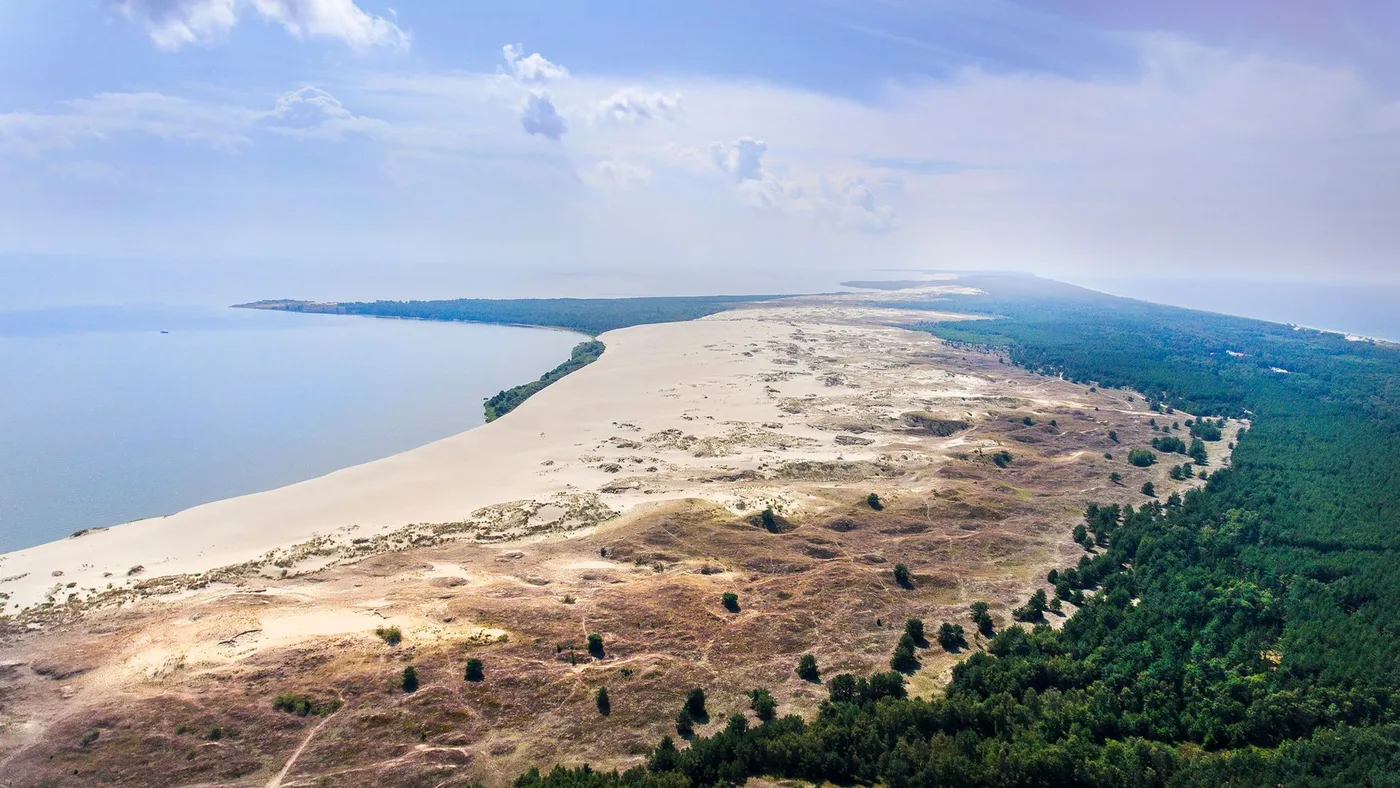
Drive 160 kilometres west from Siauliai to Klaipeda, Lithuania's port city on the Baltic coast. Klaipeda was Memel under Prussian and German rule, and the old town retains its half-timbered, Germanic character -- different from anything else in Lithuania. Take the short ferry from Klaipeda across the lagoon to the Curonian Spit (Kursiu Nerija), a 98-kilometre sand peninsula shared between Lithuania and Russia's Kaliningrad region.
The Lithuanian half of the spit is a national park. Drive to Nida, the main village, about 50 kilometres from the ferry landing. The sand dunes here -- the Parnidis Dune reaches 52 metres -- are vast and silent, with views across the lagoon to the Kaliningrad side. Thomas Mann spent summers here in the 1930s, and his wooden house is now a museum. Stay the night in Nida. The sunsets over the lagoon are worth arranging your evening around. Drive time from Siauliai: about 2 hours 30 minutes plus the ferry.
Days 6-7: Riga and Jurmala, Latvia
Drive the Curonian Spit back to Klaipeda, then take the A11/A1 north through western Lithuania and into Latvia. The drive to Riga, Latvia is about 300 kilometres and takes roughly 3 hours 30 minutes. The landscape along this stretch is flat agricultural land -- wide fields, forest belts, and very little traffic once you leave the main highway.
Spend day six exploring Riga -- the Art Nouveau district on Alberta Street, Central Market, the Old Town, and the Quiet Centre. On day seven, take the commuter train from Riga to Jurmala (30 minutes, runs every half hour). Jurmala is a string of beach towns stretching 25 kilometres along the Gulf of Riga, with wooden villas from the 19th century, pine forests, and wide sandy beaches. Walk the beach at Majori or Dzintari, have lunch at one of the beachfront cafes, and return to Riga for the evening.
Day 8: Sigulda and the Gauja Valley, Latvia
Drive 50 kilometres northeast from Riga to Sigulda, Latvia, the gateway to Gauja National Park. The Gauja Valley is the closest thing the Baltics have to mountains -- sandstone cliffs, dense forest, and the Gauja River winding through a valley that drops about 80 metres below the surrounding plateau. It is not alpine, but after the flat coastal landscape, the relief is welcome.
Visit Turaida Castle, a rebuilt red-brick fortress from the 13th century with views over the valley from its round tower. The Gutmanis Cave, carved from sandstone, has inscriptions dating to the 17th century. If the weather is good, take the cable car across the valley -- it is the only one in the Baltics. Sigulda also offers bobsled rides (summer and winter) on its Olympic-standard track. Continue north after lunch. Drive time from Riga: about 1 hour.
Day 9: Parnu, Estonia
Cross into Estonia and drive to Parnu, Estonia's summer capital, about 180 kilometres from Sigulda. The drive takes approximately 2 hours 30 minutes via the E67 (Via Baltica). Parnu is a resort town with a long, white sand beach, low-rise wooden architecture, and a calm, unhurried atmosphere. It has been a spa destination since the 19th century, and several of the old spa hotels still operate.
Walk the beach promenade, visit the small Old Town, and have dinner at one of the restaurants near the river mouth. Parnu is a good place to decompress after a week of driving. The town is small enough to cover on foot in an afternoon, and the beach -- backed by pines, facing west -- catches the evening light well. Stay overnight.
Day 10: Tallinn, Estonia
The final drive from Parnu to Tallinn, Estonia is 130 kilometres, about 1 hour 45 minutes on the E67. Arrive by mid-morning and spend the day in Tallinn's Old Town -- Toompea Hill, Town Hall Square, Pikk Street, and the medieval walls. In the afternoon, walk to Telliskivi Creative City and the wooden houses of Kalamaja.
You will have driven roughly 1,000 kilometres over ten days, passing through three countries, two national parks, and a self-declared independent republic. The distances are manageable, the roads are well-maintained, and the variety -- from baroque churches to sand dunes to medieval towers -- is more than you would expect from a region this size. The Baltics reward slow travel, and ten days by car is one of the best ways to see them.
Frequently asked questions
- How many days do you need for a Baltic road trip?
- Ten days is ideal for a Vilnius-to-Tallinn route with meaningful stops. Seven days works if you prioritise capitals and a few key destinations. Two weeks lets you include the coast, islands, and smaller towns.
- Can you drive between the Baltic states?
- Yes. Roads between Lithuania, Latvia, and Estonia are well maintained, and border crossings within Schengen are seamless — no stops or passport checks. Driving times between capitals are 4-5 hours.
- Do I need an international driving permit in the Baltics?
- EU licences are accepted. US, UK, Canadian, and Australian licences are generally accepted for short visits, but carrying an International Driving Permit is recommended as a backup.
- Which direction should I drive — north or south?
- Either works. Vilnius to Tallinn (south to north) lets you end in a city with easy ferry connections to Helsinki. Tallinn to Vilnius (north to south) saves the largest and most architecturally diverse capital for last.
Plan your visit
We organise private, guided journeys through the Baltics. Tell us your dates and we will build the route around you.
Start planning →