
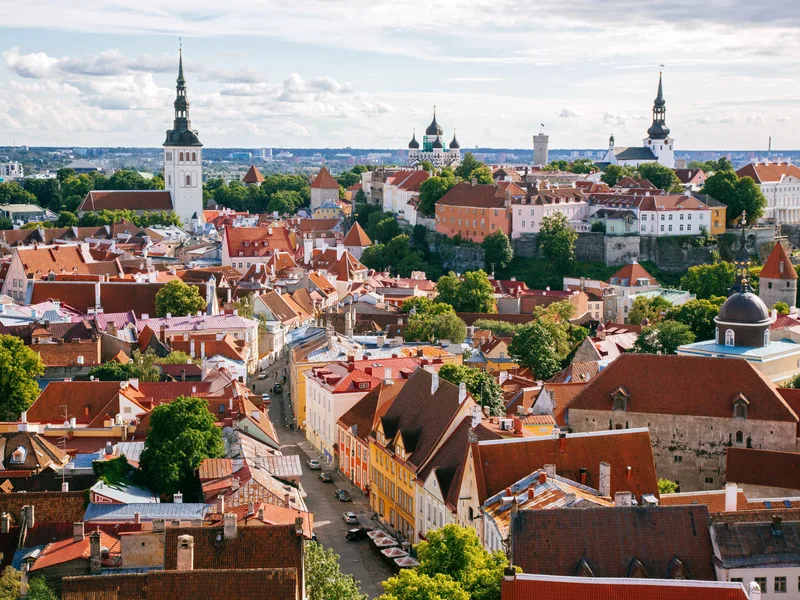
Food crawl through Tallinn's Old Town
Tallinn's Old Town is small enough to walk across in fifteen minutes, but most visitors never eat well here. They end up at the restaurants around Raekoja plats — the Town Hall Square — where the menus are in six languages and the prices reflect the location rather than the kitchen. The better places are a few streets away, often upstairs or in courtyards, and they serve food that is recognisably Estonian rather than generically "European."
What Estonian food actually is
Estonian cuisine is rooted in the same traditions as Finnish and northern Latvian cooking: rye bread, dairy, pork, root vegetables, preserved fish, and foraged ingredients. It is not showy food. The flavours tend toward sour, smoky, and earthy — fermented dairy, dark grain, cured meat. What has changed in the past decade is that younger Estonian chefs have started treating these traditions as a foundation rather than a limitation, applying modern technique to ingredients that their grandmothers would recognise.
Rye bread is the centrepiece of the Estonian table. Dense, dark, slightly sweet, and often made with malt, it appears at every meal. Good rye bread in Estonia has a complexity that most visitors do not expect — notes of coffee, molasses, and a faint sourness from the long fermentation. In the Old Town, look for loaves at Muhu Pagariköök (Pikk 16), a bakery specialising in traditional island recipes from Muhu. Their curd-filled pastries are worth a stop on their own.
Kama, curd, and the dairy tradition
Kama is Estonia's most distinctive food — a finely milled flour made from roasted barley, rye, oat, and pea. Mixed with buttermilk or kefir, it becomes a thick, nutty porridge that Estonians eat for breakfast or dessert. The taste is unusual: toasty, slightly bitter, and satisfying in a way that is hard to describe until you have tried it. Several Old Town restaurants serve kama desserts — often layered with fresh berries and whipped curd — but the simplest version, mixed with cold buttermilk, is the most authentic.
Estonian curd cheese (kohupiim) appears everywhere: in pastries, pancakes, on bread, and as a dessert with jam. The kohuke — a chocolate-covered curd bar — is sold at every corner shop and is arguably Estonia's national snack, though no restaurant would put it on a menu.
Baltic herring and smoked fish
The Baltic herring (räim) is smaller and less oily than its Atlantic cousin. Estonians eat it fried, pickled, smoked, and salted. In autumn, the Tallinn Herring Days festival brings fishermen and smokers to the harbour, but year-round you can find good herring at Leib Resto ja Aed (Uus 31), a restaurant in a medieval building near the eastern wall. Their rye bread with herring butter is a precise, simple plate that captures Estonian flavour in a few bites. The courtyard garden, when open, is one of the most pleasant dining spots in the Old Town.
Smoked sprats are the other essential fish. Canned Estonian sprats in oil are a grocery-store staple across the Baltics, but the fresh-smoked version — bought warm from a market stall — is an entirely different experience. The small fish are golden, crisp-skinned, and best eaten with your fingers alongside dark bread and a cold beer.
Where to eat, away from the square
Rataskaevu Street, one block west of the Town Hall Square, has a noticeably better ratio of quality to price. Rataskaevu 16 (yes, the name is just the address) serves Estonian comfort food — blood sausage, sauerkraut, roasted root vegetables — in a vaulted cellar. The portions are large and the atmosphere is local. Further uphill toward Toompea, Lore Bistroo (Pikk jalg 9) offers a seasonal menu that changes weekly and uses ingredients sourced from Estonian farms. The space is small, so booking ahead is wise.
For a morning coffee and pastry, walk to the Balti Jaama Turg (Baltic Station Market) just outside the Old Town walls to the north. The renovated market hall has a good selection of Estonian cheeses, smoked meats, and baked goods, and the coffee at Røst is among the best in the city.
The best meals in Tallinn are the ones that taste like they could not have been made anywhere else. When the bread is right and the fish is local, the simplicity is the point.
Estonian food does not try to impress on first sight. It earns its appeal through ingredient quality and a deep, quiet comfort — the kind of cooking that makes sense in a cold climate where the growing season is short and preservation is not a trend but a necessity. Spend a few meals exploring beyond the obvious, and Tallinn's Old Town reveals a food culture that is much older, and more interesting, than the medieval-themed tourist restaurants suggest.
Plan your visit
We organise private, guided journeys through the Baltics. Tell us your dates and we will build the route around you.
Start planning →