
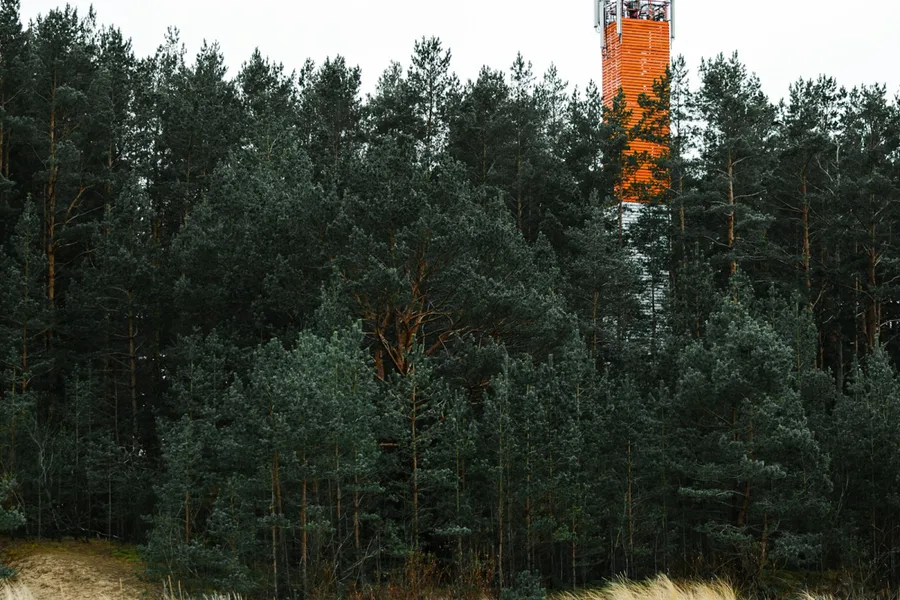
Wild Estonia: bogs, islands, forests
Estonia is roughly 50 percent forest. Add in the bogs, the coastline, and the 2,000-plus islands, and you have one of the least densely settled landscapes in Europe. The country has a population of just 1.3 million, and outside Tallinn, Estonia and a handful of smaller cities, much of the land is given over to trees, water, and silence. For travellers who care about nature, Estonia offers something increasingly rare on the continent -- large stretches of genuinely wild terrain, accessible but uncrowded.
Lahemaa National Park
Lahemaa is the closest national park to Tallinn, Estonia -- about an hour's drive east along the coast. It covers a wide stretch of shoreline and hinterland, mixing coastal forest, erratic boulders left by glaciers, and several restored Baltic German manor houses. Palmse Manor and Sagadi Manor are both open to visitors, with manicured grounds that contrast sharply with the wild coast a few kilometres away.
The park's bog trails are a highlight. The Viru Bog boardwalk is short and well maintained -- a good introduction if you have never walked through a raised bog before. For something longer and quieter, the Kakerdaja Bog trail deeper in the park sees fewer visitors. In both cases, the landscape is striking: open expanses of sphagnum moss, dark bog pools, and stunted pines stretching to the horizon.
Soomaa National Park and the fifth season
Soomaa, in western Estonia, is defined by water. Every spring, snowmelt and rain flood the forests and meadows to the point where roads disappear and the only way to travel is by canoe. Estonians call this the "fifth season" -- a period of weeks when the landscape transforms into an inland sea. Guided canoe trips through the flooded forest are available from late March into April, depending on conditions.
Outside the flood season, Soomaa offers excellent bog walks -- the Riisa Bog trail is one of the longest boardwalk routes in Estonia -- and traditional dugout canoe experiences on the Navesti River. The park is quiet year-round, and the sense of isolation is genuine. There is no mobile coverage in parts of the interior.
Saaremaa island
Saaremaa is Estonia's largest island, reached by a short ferry from the mainland or a drive across the causeway via Muhu island. The pace here is slow. Kuressaare, the main town, has a well-preserved 14th-century bishop's castle on the waterfront -- one of the few intact medieval fortifications in the Baltics.
The island's interior is marked by juniper heaths, old stone walls, and scattered farmsteads. The Kaali meteorite craters -- a cluster of impact sites from roughly 3,500 years ago -- are an unusual geological feature. The largest crater, about 100 metres across and filled with water, sits in a quiet clearing surrounded by forest. Saaremaa also has a long tradition of craft beer and local food, with several small breweries and farm restaurants.
Matsalu National Park: the bird migration corridor
Matsalu, on Estonia's western coast, is one of the most important bird migration stopover sites in Europe. In spring and autumn, tens of thousands of geese, swans, cranes, and waders pass through the bay and the surrounding coastal meadows. The park has observation towers positioned along the shoreline, and during peak migration weeks -- typically mid-April and September -- the volume of birds is remarkable.
Even outside migration season, Matsalu is a rewarding landscape. The coastal meadows are grazed by Highland cattle, and the reed beds along the Kasari River delta shelter bitterns, marsh harriers, and other wetland species. The town of Lihula, just outside the park, has a small museum and a few guesthouses.
Alutaguse: brown bear watching
The forests of Alutaguse, in northeast Estonia, are home to the country's population of brown bears -- estimated at around 700 animals. Several operators maintain watching hides at the edge of the forest, where visitors sit in silence from evening into the early hours, waiting for bears to emerge at feeding sites. Sightings are not guaranteed, but the success rate is high during summer months.
The experience is as much about the forest itself as the bears. The boreal woodland in this part of Estonia is dense and old, with limited human settlement. Lynx and wolves also live here, though they are far harder to spot. The nearest town, Iisaku, has basic accommodation, and the hides are managed to minimise disturbance to the animals.
Walking on bog shoes
One experience that ties the Estonian nature landscape together is bog shoe walking. Traditional bog shoes -- wide, flat frames strapped to your boots -- allow you to walk across the surface of a raised bog without sinking. Guided bog shoe hikes are offered in Soomaa and several other parks, usually lasting two to three hours. You wade through knee-deep water, cross floating moss carpets, and reach parts of the bog that no boardwalk serves. It is wet, slow, and unlike anything else in European outdoor travel.
Estonia's nature is not dramatic in the Alpine sense. There are no mountains, no deep gorges, no volcanic landscapes. What it offers instead is quietness, scale, and the feeling of being in a place where the forest and the bog have been left largely alone. For travellers coming from more crowded parts of Europe, that quality of stillness is the real draw.
Plan your visit
We organise private, guided journeys through the Baltics. Tell us your dates and we will build the route around you.
Start planning →