Travelling in Estonia
Estonia is the northernmost of the three Baltic states, a country of dense forests, a deeply digital society and a medieval capital that looks much as it did six centuries ago. With a population of just 1.3 million, it feels spacious and unhurried — a place where nature begins at the edge of town.
Why Estonia belongs on your itinerary
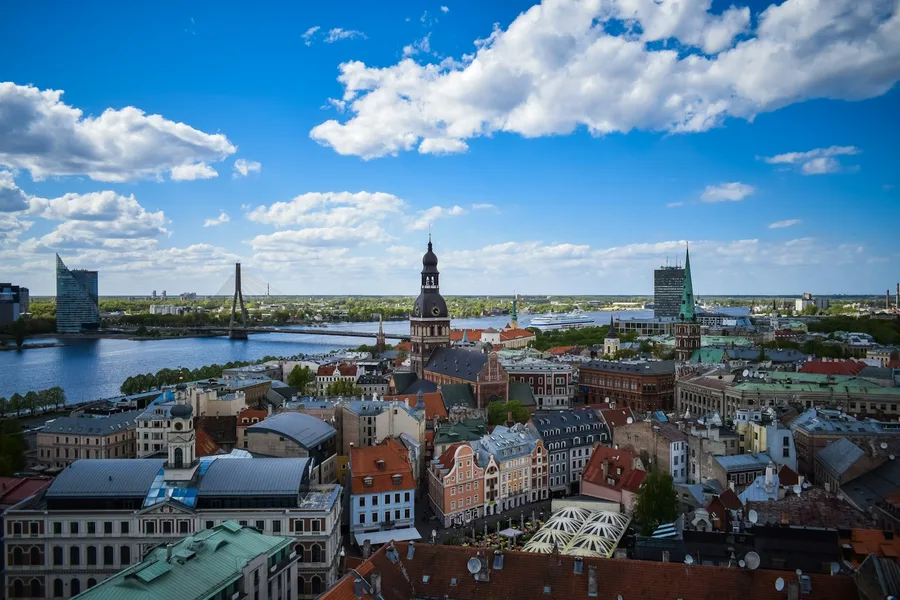
Most visitors arrive in Tallinn, Estonia and quickly understand why the city's Old Town earned its UNESCO World Heritage listing. The medieval walls are remarkably complete, enclosing a warren of merchant houses, guild halls and churches that date to the 13th and 14th centuries. Toompea hill, the seat of Estonian parliament, offers views across the red rooftops to the Baltic Sea. But Tallinn is also a modern Nordic capital — the city that created Skype has a thriving food scene and a contemporary art museum in a former power plant.
Beyond Tallinn, Estonia rewards the curious. Lahemaa National Park, just an hour east of the capital, is one of the best-preserved coastal wilderness areas in northern Europe. Its four peninsulas jut into the Gulf of Finland, each covered in boreal forest and edged with erratic boulders left by retreating glaciers. The park also contains some of Estonia's finest Baltic German manor houses — Palmse and Sagadi — restored to their 18th-century grandeur and open to visitors.
Tartu and the south
Tartu, Estonia is the country's intellectual heart. The University of Tartu, founded in 1632, anchors a compact city that blends neoclassical architecture with student energy. The city was named a European Capital of Culture and has an excellent museum culture — the Estonian National Museum, housed in a striking building on a former Soviet airfield, traces the country's history from ancient Finno-Ugric roots through centuries of foreign rule to independence.
Southern Estonia is the least-visited part of the country and arguably the most beautiful. The rolling hills of Haanja and Otepaa offer hiking in summer and cross-country skiing in winter. Small farmsteads dot the landscape, many now converted into guesthouses where travellers can taste traditional smoked fish, black bread and hand-churned butter.
The western coast and islands
Parnu, Estonia has been a resort town since the 1830s, when the healing properties of its coastal mud first drew visitors. Today it remains Estonia's summer capital, with a long white-sand beach backed by pine forest and a pleasant old town with wooden architecture. The spa tradition continues — Parnu has more spa hotels per capita than almost anywhere in Europe.
Saaremaa, Estonia's largest island, feels like a separate country. Reached by ferry from the mainland, it has its own pace and culture. The medieval Kuressaare Castle, built by the Teutonic Order, sits at the water's edge in remarkable condition. The island's landscape is defined by juniper heaths, windmills and dolomite cliffs. Traditional island food — smoked fish, wild garlic, juniper-infused beer — reflects a way of life that has changed slowly over centuries.
Practical information
Estonia uses the euro and is part of the Schengen Area. English is widely spoken, particularly in Tallinn and Tartu. The country is compact — you can drive from Tallinn to Tartu in under two hours, and from Tallinn to Parnu in about ninety minutes. Summer days are long, with nearly 19 hours of daylight in June. Winters are cold and dark but atmospheric, especially during the Tallinn Christmas market.
The best time to visit is May through September, when temperatures are mild and daylight hours are generous. September brings fewer visitors and autumn colour to the forests. Winter travellers should consider the Christmas markets (late November through December) or the crisp, snow-covered landscapes of January and February.
Places in Estonia
Tallinn Old Town
UNESCO-listed medieval centre with Hanseatic architecture and Toompea hill.
Lahemaa National Park
Coastal wilderness with manor houses, boulder fields and boreal forest.
Tartu
University city and European Capital of Culture.
Parnu
Seaside resort with white-sand beach and spa tradition.
Saaremaa
Estonia's largest island with medieval castle and juniper heaths.
Journeys featuring Estonia
Frequently asked questions
- Do I need a visa to visit Estonia?
- Estonia is part of the Schengen Area. Citizens of the EU, US, UK, Canada, Australia, and many other countries can enter visa-free for up to 90 days. Check with your nearest Estonian embassy for specific requirements.
- What currency does Estonia use?
- Estonia uses the euro. Credit and debit cards are widely accepted, even in smaller towns and markets. Cash is rarely needed.
- What is the best time to visit Estonia?
- June to September offers the warmest weather and longest daylight — up to 19 hours in midsummer. May and early October are quieter, with mild temperatures and fewer visitors. Winter brings snow, Christmas markets, and very short days.
- How many days should I spend in Estonia?
- Three to four days covers Tallinn and one day trip (Lahemaa National Park or a coastal town). A week allows you to explore Tartu, Saaremaa island, and the western coast at a comfortable pace.
- Is English widely spoken in Estonia?
- Yes. English is widely spoken in Tallinn, Tartu, and tourist areas. Younger Estonians are generally fluent. In rural areas, a few basic phrases in Estonian are appreciated but not essential.